

Introduction
In recent years, modern medicine has entered a new era focused not only on the treatment of diseases, but also on cellular regeneration, slowing biological aging, and restoring tissue functions.
At the center of this transformation are some of the most advanced biotechnological approaches, one of which is exosome-based therapies.
What Is an Exosome?
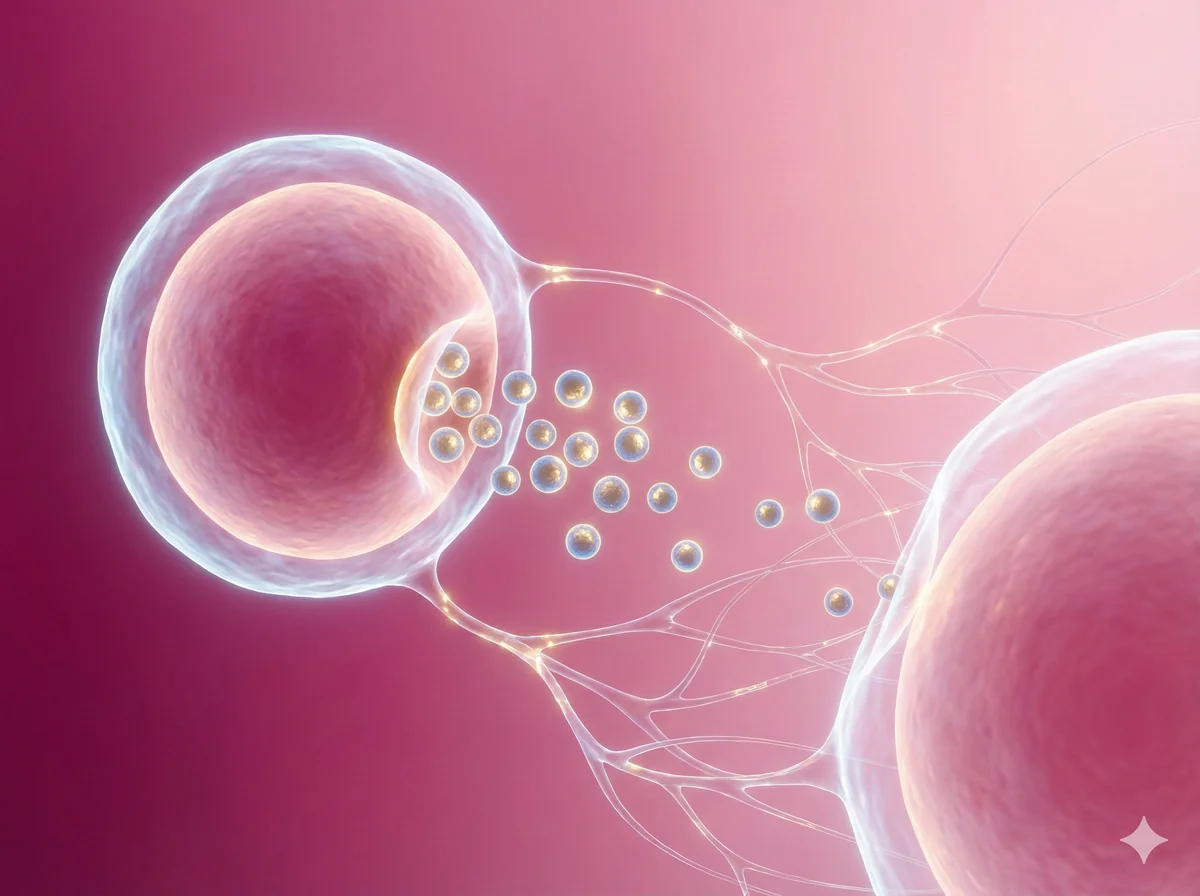
Exosomes are extracellular vesicles naturally secreted by cells, measuring approximately 30–150 nanometers in size. These microvesicles act as biological information carriers that enable communication between cells.
Main Components They Contain:
- Growth factors
- Cytokines
- MicroRNA (miRNA)
- Proteins and lipid signaling molecules
Through these contents, exosomes can directly influence the behavior of target cells and gene expression.
Scientific Advantages of Exosome Therapies
Exosome therapies carry the regenerative power of stem cells but do not contain living cells. This significantly enhances the safety profile of the treatment.
Safe
No risk of tumor formation
Minimal Risk
Risk of immune reaction is minimal
Targeted Effect
Provides a targeted effect
Predictable
Standardized and predictable outcomes
The Concept of Biological Lifting
In the literature, exosome therapies are frequently described using the term “biological lifting.” This approach aims to stimulate the tissue’s own regenerative capacity rather than creating volume through mechanical fillers.
As a result:
- Natural facial expressions are preserved
- Tissue quality improves
- An upward, balanced tightening effect is achieved
Clinical Effect and Timeline
In exosome therapies, the effect process is biological and progresses gradually.
0–4 Weeks
- Skin hydration
- Increase in radiance
- Improvement in tissue vitality
4–8 Weeks
- Increase in collagen and elastin production
- Tightening
- Reduction in fine wrinkles
8–12 Weeks
- Biological lifting effect
- Tightening of facial contours
Exosome Sources
In exosome therapies, efficacy is directly dependent on the source and production technology.
Human-Derived Exosomes
- Derived from umbilical cord and mesenchymal stem cell origins
- Produced in GMP-certified laboratories
- Exhibit high biological activity
Animal-Derived Exosomes
- Most commonly sourced from salmon
- Rich in DNA and protein content
- Provides strong efficacy in dermatologic applications
Product Quality and Effective Dose
There are two main factors that determine success in exosome treatments:
Effective Dose
The concentration of exosomes in the vial directly determines treatment efficacy.
Manufacturing Standard
GMP certification, purification quality, and concentration standardization are critically important.
Safety and Ethical Approach
Modern exosome therapies adhere to high safety standards:
- Produced under sterile conditions
- Compliant with GMP standards
- Processed through FDA- and EMA-compliant procedures
In these treatments, an ethical approach, scientific transparency, and patient safety are fundamental principles.
Conclusion
Exosome therapies represent an advanced biotechnological approach positioned at the intersection of aesthetic and regenerative medicine.
Permanent Solution
They do not offer temporary fixes; they improve tissue quality.
Naturalness
Preserves natural appearance and strengthens biological processes.
Medicine of the Future
One of the strongest representatives of modern medicine’s vision for rejuvenation and regeneration.
Learn More About Exosome Treatments
Schedule a free pre-consultation to find out whether exosome treatments are suitable for you.